Why go-live is the start of adoption, not the finish line
Three evenings a week, I take my daughter to her roller skating class.
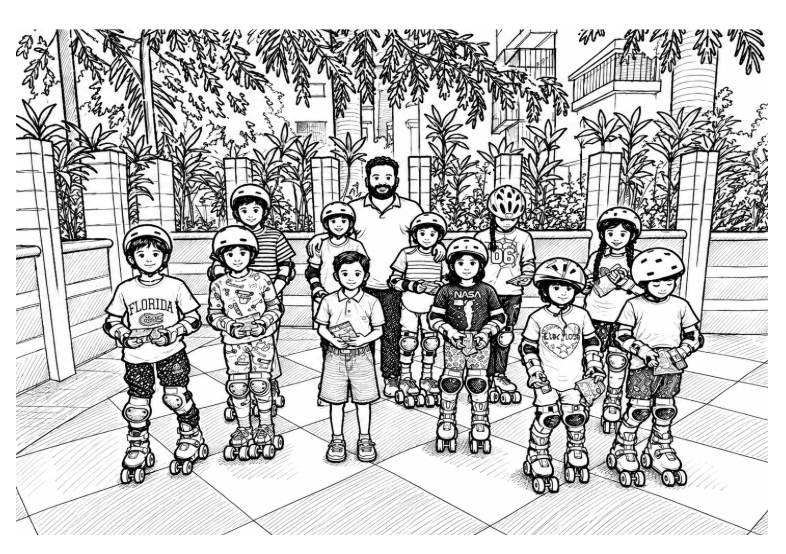
It’s a small neighborhood rink. One patient coach. Ten to fifteen kids in helmets, knee pads and full gear. I sit on the bench along the side wall, phone in hand, pretending to work. Mostly, I watch. (The emails can wait. The kids are far more interesting.)
My daughter took to it quickly. Within a few weeks she was off the wall, falling and getting up without much drama. I was proud. But she wasn’t the one I kept watching.
There was a boy in her batch. Same age, maybe. He never missed a class. Good skates. Proper helmet. Full set of gear. Always one of the first to arrive.
And week after week, he stayed at the wall.
He was trying. He’d shuffle sideways along the barrier, one careful step at a time, both hands holding on. He’d watch the other kids glide through the middle of the rink. You could see him thinking about it. But his hands never left the wall.
Here’s what bothered me. The other kids weren’t more talented. Some of them had been exactly where he was a few weeks earlier. Same rink. Same skates. Same coach. Something had shifted for them. It hadn’t shifted for him.
Then one evening I arrived late and looked for him at his usual spot. He wasn’t there.
He was in the middle of the rink.
Arms out. Face tight with concentration. Moving in that stiff, held-breath way of someone doing something terrifying for the first time. A girl from his batch was beside him, skating slowly at his pace. The coach circled nearby, close enough to catch, far enough not to crowd. He gave the boy instructions a little different from what he gave the others.
The boy fell many times. Got up. Kept going.
When he came off the rink that day, he was smiling in a way I had never seen. His parents on the bench were leaning forward.
What changed?
He hadn’t suddenly become brave. He hadn’t watched a video on technique. Three simple things had changed:
- A peer came to where he was instead of skating ahead.
- A coach gave him attention that fit him, not the whole class.
- One small moment felt safe enough to try, even though he wasn’t as good as the others yet.
He didn’t let go because someone told him to. He let go because letting go finally felt survivable.
Time to wear the Product Enthusiast’s hat
I work with organizations that build and roll out enterprise digital products. Almost every rollout I’ve seen follows the same script.
There’s a kickoff. Access is provisioned. Training happens. A manager sends an encouraging email. The vendor follows up with resources. Someone posts tips in a shared channel every week. Everything is done right.
For a few weeks, people log in. They click around. They try things.
And then, slowly, most of them drift back to the wall.
The tool isn’t bad. The people aren’t resistant. They’re doing what the boy did: staying close to what feels safe, moving sideways in small, careful steps, watching others from a distance.
The fix that doesn’t work
The usual response is more of the same. More training. More reminder emails. More feature highlights. As if the problem is information, and the cure is more of it.
The boy had seen others skate. He knew the theory. He had all the gear.
Information was never his problem. Position was.
He needed someone who understood exactly where he was. Not where he should be. Not where the others already were. And that someone had to know what one small next step looked like from that exact spot.
Adoption is not an event
Go-live feels like the finish line. The project plan says so. The launch email says so. The dashboard turns green.
But go-live is the moment the skates go on. That’s all.
Adoption doesn’t happen at go-live, at first login, or when training ends. It’s a slow, human progression through stages you can’t always see. Each stage has its own hesitation. Its own reason for gripping the wall. Its own version of letting go.
The organizations where value takes root don’t have better tools. Someone there understood the journey well enough to meet each person at the right stage, with the right nudge, at the right time.
That is the whole job.
What this series will cover
Every week for the next few months, I’ll share one idea from the rink. We’ll walk the journey stage by stage, from the person still standing at the rink door to the one helping the newcomers. For each stage you’ll get three things: what it looks like, what keeps people stuck, and what helps them move.
Before next week
Think about one product your team rolled out in the last year.
Who is still holding the wall? And does anyone know exactly where they’re standing?
Next week: why adoption is a journey, not a destination, and what that changes about how you measure it.