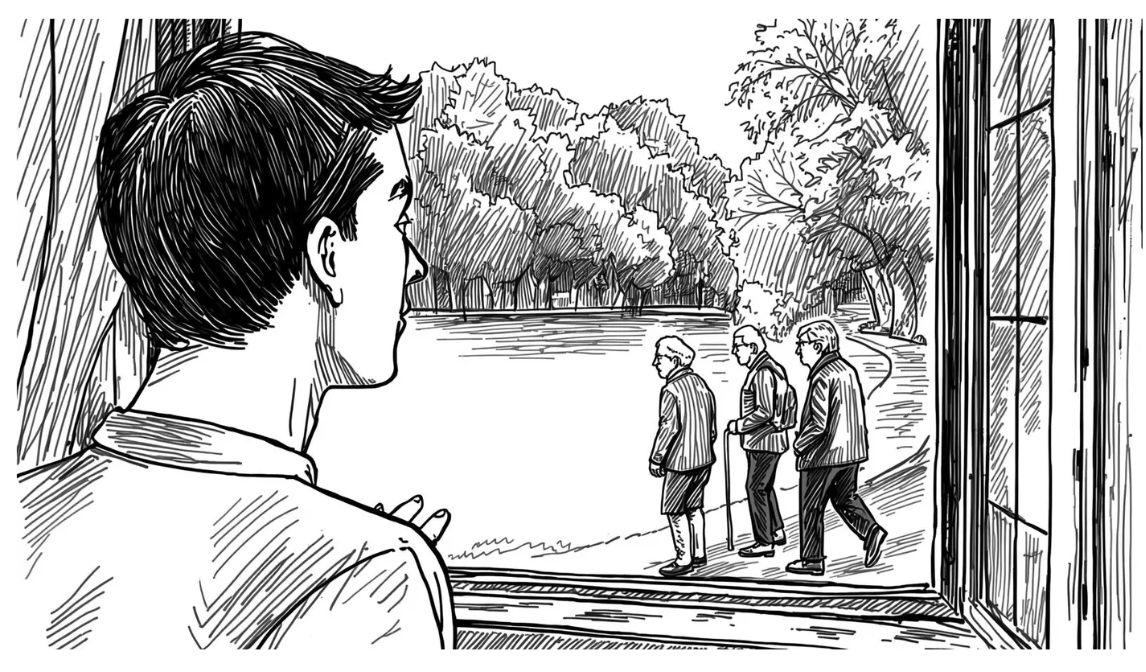
I grew up in a housing colony where mornings had an unspoken rhythm. As the sun came up, the park slowly filled. The same faces, the same groups, the same unhurried laps around the same path. Mostly senior citizens. Chatting, laughing, occasionally arguing, but always moving. Day after day. Week after week. Year after year.
What struck me wasn’t their fitness. It was their consistency.
They wore good shoes, the kind you’d expect on someone half their age. They showed up in winter. They showed up in the summer. They showed up when it was drizzling and probably shouldn’t have. No excuses. No skipped days. Just this quiet, effortless showing up that I couldn’t fully explain.
Every morning, watching them from my window, I felt two things simultaneously. Admiration. And a mild, nagging envy. I wanted to be one of them. So one day, I decided I would be.
And like most people who decide to “finally start,” I did the most logical thing. I bought new shoes. Good ones. The kind that looks serious. I added earplugs, a proper outfit, and a digital watch to track my steps. The gear was perfect. I looked the part completely.
The first few mornings were genuinely exciting. The novelty of a new routine. The satisfaction of the alarm not being a battle. That small internal applause of “I’ve finally started.” I even looked at the senior citizens with a quiet sense of pride, my eyes announcing, “I have arrived.”
I was motivated. For a few days.
And then, something changed.
The excitement faded. The alarm became irritating. The walk felt long. The route felt repetitive. The shoes were still new, but the experience wasn’t. Slowly, almost without noticing, I started bargaining with myself. Five more minutes. Skip today, double tomorrow. One missed morning became three. Three became a week.
I had quit. Quietly. Without ever making a decision to quit. One morning, walking half-heartedly before giving up entirely, I looked at the senior citizens again. This time with frustration instead of admiration. They weren’t listening to podcasts. They weren’t tracking steps. They weren’t chasing any visible milestone. No watches. No earphones. No gear. Yet they showed up. Every single day. Effortlessly. I couldn’t make sense of it. What did they have that I didn’t? I had better shoes. I had a watch. I had more reasons to be fit. I had motivation when I started.
So why was I the one going back to bed? The answer didn’t arrive immediately. It revealed itself slowly as I observed more.
They weren’t walking for fitness. They weren’t even walking for discipline. They were walking for each other. The park wasn’t a fitness space. It was a social space. Miss a day, and someone noticed. Skip a week, and someone called. Conversations from yesterday continued today. Jokes evolved. Stories picked up exactly where they left off. Relationships deepened, slowly, almost invisibly, over months and years of shared mornings.
Walking was just the excuse. Just a by-product.
What kept them coming back was something else entirely. Connection. Belonging. The quiet comfort of being expected somewhere, by someone. The feeling that if you didn’t show up, something would be missing. Not just for you, but for them.
I had approached walking like a task. Buy gear, follow a plan, build a habit. They had approached it like a relationship. Show up, engage, stay connected.
That’s not discipline. That’s something far more durable.
I’ve spent a lot of time since then thinking about why some things hold us, and others don’t.
Not just morning walks. Apps. Communities. Products. Routines. Some of them we return to for years, long after the novelty is gone, without ever stopping to ask ourselves why. Others we abandon in weeks, even when we wanted them to stick.
The difference almost never comes down to the quality of the thing itself. It comes down to something quieter. Whether something of ours lives there. Whether leaving would feel like a loss.
The senior citizens weren’t disciplined. They were connected. And connection, once it forms, doesn’t need motivation to sustain itself.
I’ve started calling this The Walker Effect.
It’s what happens when repeated participation quietly builds invisible stakes. Relationships. History. Identity. A sense of being expected. Until one day, leaving doesn’t feel like a choice anymore. It feels like a cost.
It isn’t habit. It isn’t addiction. It’s simpler and more human than either.
Here’s what’s interesting.
The most successful products in the world are running on exactly this principle. Not the loud ones, the ones with streaks and badges and daily reminders. The ones that have genuinely become part of people’s lives. The ones people would quietly panic if they disappeared tomorrow.
They don’t keep users coming back by being impressive. They keep users coming back by making leaving feel like a loss.
How they do that, the frameworks behind it, the specific mechanics, the nudges, the loops, the value hierarchies, that’s a longer discussion, probably for another blog post.
But it starts here. With a morning walk. And a pair of shoes that weren’t the problem.